
The first disaster
Never have I written more fateful words

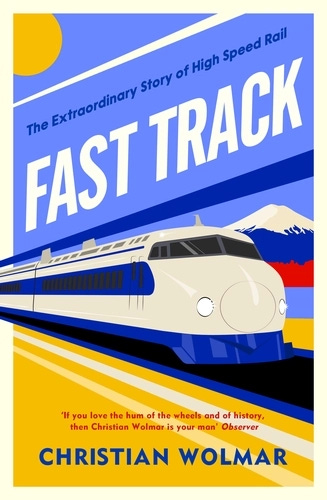
Never have I written more fateful words. In the draft of my new book, Fast track, to be published in the summer, I wrote that there had never been a high speed train crash on dedicated tracks that had killed large numbers of passengers. And that was true until now.
In the chapter I listed the various accidents such as the one in Wenzhou in China that involved a high speed train travelling relatively slowly and the Spanish one at Santa Maria di Compostella which occurred when the high speed train was no longer on dedicated tracks. And so on through the various fatal crashes, none of which involved high speed trains at full throttle running into each other. Therefore the record of 60 plus years of the operation of high speed trains was almost unblemished.
Then fatefully I wrote, ‘perhaps by the time you read these words, there will have been one’. Fortunately for me, the book is still in production and I can amend those words and add details about the Spanish disaster. But I clearly had tempted fate.
I suppose it was the law of averages but the recent accident in Spain was, in a way, inevitable. High speed trains are full of risk, even though they use all the most modern safety equipment and run on dedicated tracks where the paucity of trains contributes to the safety record. They do, however, run at very high speeds on narrow tracks that may be subject to all kinds of potential damage caused by weather or earthquakes and are vulnerable to terrorist attacks. We do not know the cause of the disaster though everything points to faults with the track
There was, therefore, nothing particularly prescient about my words. With tens of thousands of high speed trains operating across the world every day, at some point something was bound to go wrong. I was asked several times in the radio interviews I carried out on the crash whether the railways remained safe. The answer, of course, is a definite yes, Indeed, per million miles travelled, they are far safer than motorised traffic, and though aviation is theoretically safer, that is only because of the huge distances covered when they re not taking off or landing, the times when planes are most at risk. A short haul flight is probably more of a risk than the equivalent train journey.
The fact that there were subsequently three more minor incidents on the Spanish railways within a few days of the disaster was just one of those weird coincidences. Fortunately only one involved a fatality but there were a few injuries. The key point is that even in the 30 year period that I have been writing about transport, the safety record of both rail and aviation has increases almost exponentially. Vehicle transport, however, remains a blemish about which I have written recently here.
Therefore, there are ultimately very few lessons to be drawn from this awful disaster. Sure, perhaps there are issues about track maintenance but essentially the high speed rail industry has already got it right – safety is paramount and will remain so. And by and large, they have cracked it but nothing will ever be 100 per cent safe when it involves speeds of 200-300 kph.
Please consider becoming a paid subscriber—your support makes this work possible. Premium members recieve an additional weekly article. To subscribe, click the orange button below or the orange box at the top of this post labeled “Upgrade to Paid.”
Join us — you won’t want to miss a thing! Questions ? Email wolmarsubstack@gmail.com
It is perhaps pertinent to comment that, if a rail fracture is to blame as seems likely, then there must be greater care over being able to sense when this has happened. Network Rail has moved from a policy of full track circuiting of both rails to relying on wheel counters for proving end of train, presumably on grounds of cost. Track circuits have provided that proof in the past, but also proof of rail continuity, and such a move does seem to call into question how accidents such as this can be avoided where there is no full track circuiting.
I think Eschede should be at least mention as it was an ICE train but the line was not a High Speed one so your comments are correct.