The biggest war machine

I am obsessed by the relationship between railways and war. It is so complex and interwoven that it is difficult to distinguish causality. It is though very clear that not only did the advent of the railways change the nature of war, but they made conflicts both more extensive and bloodier.
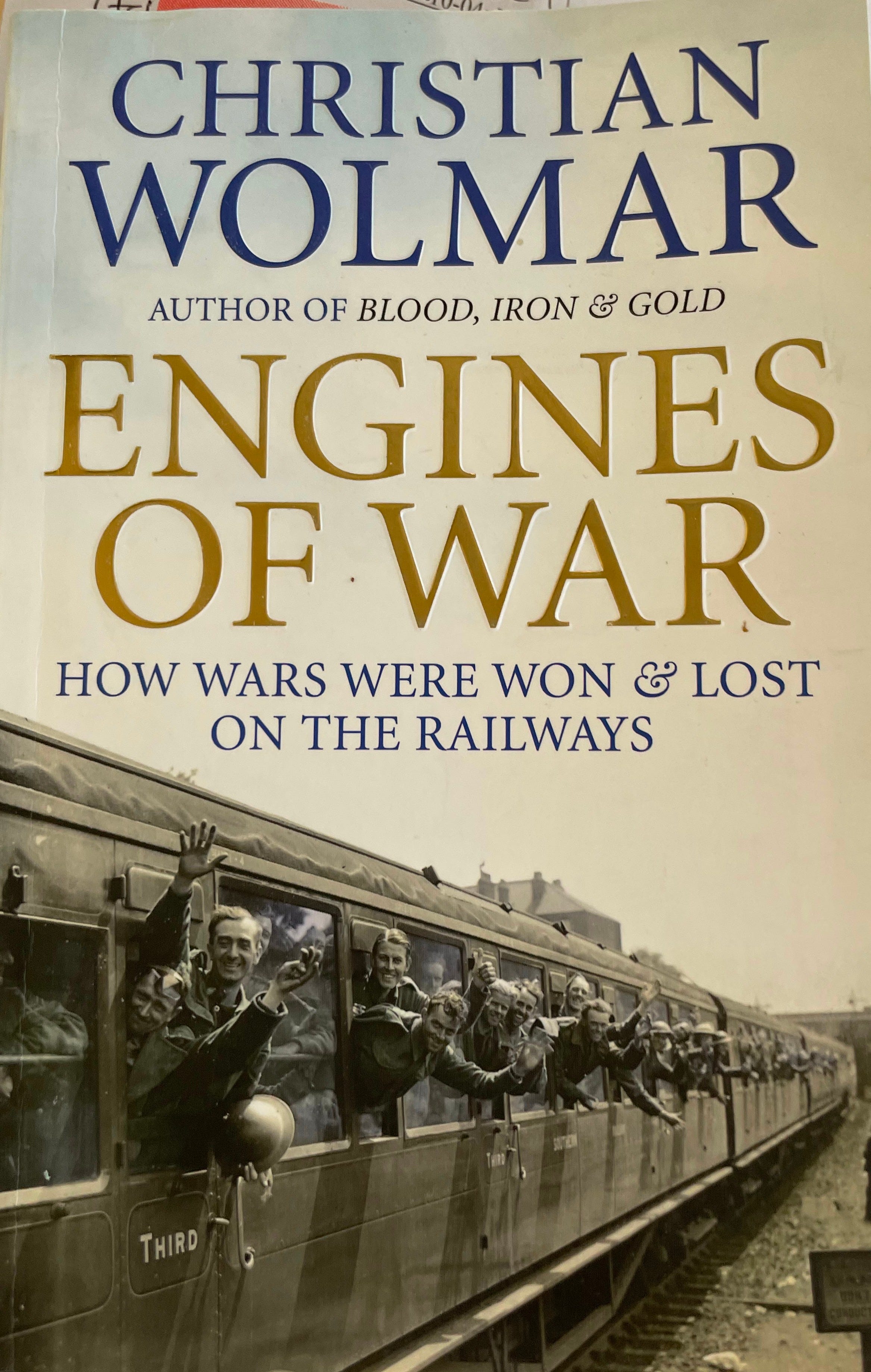
That’s why my own favourite of the books I have written, Engines of War, is so aptly named. (Incidentally I rarely think up the titles of my books and this was no exception though Liberation Line, my other book on trains and battles was my idea). Railways not only brought troops to the battlefield, they also enabled far greater supplies of ammunition to be brought to the front, and unlike the horses that were previously the main form of logistics in war, they did not need feeding (though they did require water!).
Railways therefore became an essential part of the logistics of armies and their very existence changed its nature. The example I often give is the comparison between the Battle of Waterloo which lasted less than a day, and a century later the Battle of Verdun which went on for much of a year. The first railway war was the American civil war which resulted in more deaths than all the other wars the US has been involved in before or after. Hundreds of miles of railway were built and destroyed during the conflict, and most of the key battles took place in sites accessible by rail.
Therefore I was delighted to be invited to come to Toronto to provide a talking head for an amazing eight part series on trains and warfare being produced by a Canadian company, Go Button media for worldwide distribution. Each of the eight hour long programmes has three themes, and these range from standard railway stories such as the building of the Grand Crimean Central Railway to support the troops in the hideous Crimean and the construction of the rather useless Gustav megagun, to lesser known tales such as the spies sent to disrupt the American rail network during World War Two or the remarkable story of the thousands of German scientists whisked away in secret trains to Russia in 1946 t support the Soviets’ attempt to develop military technology. The film will also feature a section on the events in my other book on trains and warfare, The Liberation Line, which has now been issued in paperback, and tells the story of the railwaymen who rebuilt the lines in northern France, Belgium and Holland after D Day.
It is great that this issue is now being examined in depth, but I still think there is a big lacuna in understanding this relationship. Railways in wartime are still largely portrayed as simply vehicles that took men to and from the battlefront, when, in fact, they were fundamental in changing the way that wars were waged. There is scope for much further research to be carried out in this field and for other writers to pick up the baton. Meanwhile, do buy my Liberation Line – I have signed copies I can despatch, just email me. wolmarsubstack@gmail.com If you are in U.S. we also have signed books avaialable.
Please consider becoming a paid subscriber this supports all my work and writing. My premium supporters this month will be previewing an additional 4 brand new articles. To subscribe click on the orange button below or orange box at top of this post “upgrade to paid.” Please join us, you won’t want to miss a thing! Questions ? Email wolmarsubstack@gmail.com
Also for premium supporters this week, I will be offering free tickets for my next London walk ( I have 2 left) , Christian Wolmar & Sam Jacobs part 3 secret history of London's rail - South Thursday, September 25 · 2 - 4pm GMT+1 Victoria Station. Email wolmarsubstack@gmail.com for a chance to get a free ticket, you have until noon 9/23 to request a ticket.
See all my future events and ticketing information on my Events page. Thank you
!