

A call comes in from the BBC. A researcher tells me that one of the expected early announcements of the new prime minister, Andy Burnham is to restore the £2 maximum bus fare that was actually introduced originally by the Conservatives. Is it a good idea he asks. And then, his second question is how much will it cost.
I have no idea about the latter. It’s very difficult to calculate given the policy may well attract lots of extra bus passengers and therefore gain revenue as well as cost it. The sum of £400m has been bounded about, but nobody quite knows how that is arrived at.
But fundamentally, it is the wrong question. Very fundamentally. We need, as a society, to provide more bus services and attract more people onto them. Buses are good for the environment, taking cars off roads. They are good for employment giving access to city centres and other locations with jobs such as industrial estates for people without cars. They are good for older people, who may not be able to drive or prefer using buses because it gives them a bit of exercise.
However, these types of benefits are not captured by the superficial analysis implied by the question of ‘what will it cost?’ . It’s worth noting, too, that in many areas the cost of bus services to overstretched local authorities have mean they have been pared back to a bare minimum and therefore the £2 maximum will not help local people since there is no bus available.
The big con of the neoliberal economics that has dominated political thinking since the days of of Thatcher and Reagan is that the government is like a household and everything has to be accounted and paid for. But government is not like that. It can borrow money cheaply, actually create money by printing it (within reason to stop inflation running away) and its size means that there is no way of knowing precisely how much money will be available in, say, a month or a year’s time.
This type of narrow thinking means that governments now have to say ridiculous things like the bus fare cap will be paid for by money saved from the overseas aid budget, which Burnham has said. This is economic nonsense. The government’s overall budget is around £1,350 billion annually. A few hundred million spent on supporting bus passengers is small change. Who knows what money will be available in a year’s time. Moreover, this type of narrow accounting does not consider the benefits outlined above such as making jobs more accessible. Nor will it take account of the fact that more people will use buses, therefore increasing the revenue – perhaps by not as much as the cost, but ultimately does that matter?
So the very premise of the BBC researcher ensures that the coverage will focus narrowly on cost rather than looking at the wider benefits. And therefore that will fail to get across the real value of increasing spending on buses.
This goes well beyond transport. I was struck by an article by the black Tory peer. Tony Sewell, in The Times the other day highlighting the lack of fathers and father figures experienced by lots of young men. He mentions how important youth workers can be in this respect and yet he supports a political party that cut back youth work drastically in its austerity policies of the 2010s. All the present Tory party bang on about today is the fact that there is too much government spending and this type of thinking dominates the agenda of news outlets such as the BBC. We need a new type of economics and a media which understands the value of services, rather than merely emphasising the cost.
Please support my work and become a premium subscriber- thanks
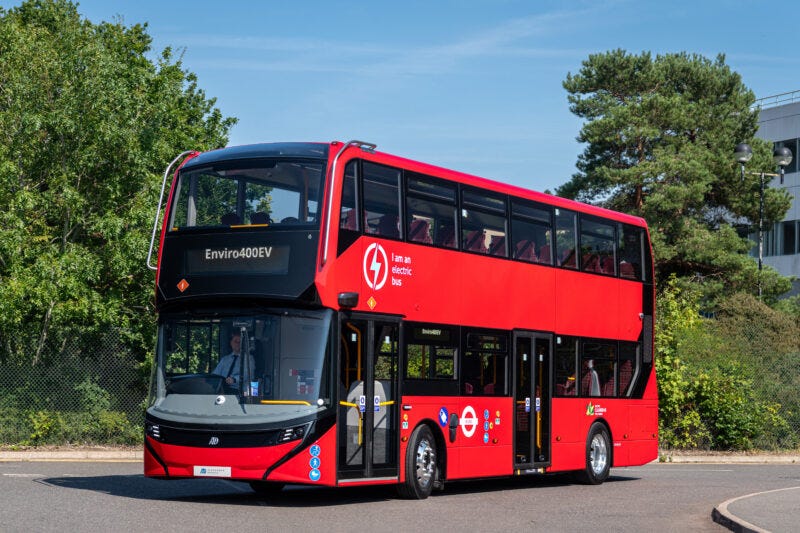
I'm convinced of the value of the £2 bus fare cap after overhearing a two women talking about it. Both were returning home from part-time cleaning (or similar minimum wage) jobs and it obviously was very significant for them. Their alternative seemed to be complicated car-sharing arrangements, fitting around changing shift patterns and family responsibilities.
Their journey was between two small towns, served by several bus routes with a combined frequency of roughly 15 minutes. Reliable service and reasonable fares had made regular bus users of these two women.
Christian here's a very good source for refuting neolibral lies - https://www.taxresearch.org.uk/Blog/