

**You can hear me speak today see below!
My book The Liberation Line was published two years ago to coincide with the 80th anniversary of D Day and I have just returned to Normandy for the first time since its publication. I have always felt moved when visiting the various memorials and museums dotted around the area and that feeling has been intensified as I have now met several children and grandchildren of those who fought, and they have been so grateful to find out about the book.
Readers of the book will know it is the story of the railwaymen who rebuilt the tracks and infrastructure to enable the lines to reopen and allow the vast quantities of supplies needed for the front to reach their destination. Yet as I never tire of repeating, this particular little – well quite sizeable actually – band of heroes has been entirely forgotten. Every time I give my lecture on this story, people always = and I mean always – come up to me afterwards and say they had never known about this story or of the vital role played by these men.
As a example, I went to the quite remarkable Utah Beach museum which has benefitted from a huge endowment from a US millionaire. This has allowed the construction of a remarkable building whose elaborate contents are greatly enhanced by the fact that the room in which there is a reconstruction of the events on the day overlooks the beach on which some of the Czech Hedgehogs used too stop tanks have been there. It is a memorable sight that helps understand the difficulties these men faced.
Yet, there was no reference to the railways and possibly worse, there was an old banner from the Red Ball Express, the failed attempt to use road transport instead of the railways, with no explanation of that particular story. I am writing to the curator to see if they would like helping putting up at least a couple of displays outlining the railway story which is so important for what happened on the Cotentin peninsula in the aftermath of D Day.
But more happily I did find a memorial to one of the heroes of the reconstruction of the bridges in the Cotentin. In Carentan, noted in my book as the location of the first railway service set up by the allies after the invasion – a little shuttle train to Courseuilles – I happened across a bridge over the Taute River that had been rebuilt just a couple of weeks after D Day by the 300th Combat Engineer Battalion . In an effort to get the vital work done quickly, men were working while under fire from the Germans and the leader of the team, Major John E Tucker, from Oklahoma, was killed by shrapnel Remarkably, there is a poster marking this incident and a panel recounting the story of Tucker and his men. The bridge is now used only for cyclists and pedestrians, and I only came across it by chance.
However, the display, which is relatively new, is an appropriate reminder of this important incident, but merely begs the question as to why there are not more such memorials across Normandy given how many similar stories of bravery and loss there are. Indeed, as I say, I will be writing to Utah Beach museum but any of you out there with relatives who served and have been forgotten should do the same to the various museums. So finding the story of Major Tucker was both heartening but a reminder of just how much more there is to do to remember these men and their stories.
Please become a premium subscriber and support my work
Special Offer — Signed Copies of Liberation Line
I have signed copies of Liberation Line available for £20, including UK postage. It makes a great gift! I can post your signed copy anywhere in the UK.
For readers across the Atlantic, my researcher Nancy also has a limited number of signed copies available in Arkansas, USA, which can be posted within the United States.
To order your copy, email me at christian.wolmar@gmail.com.


Join the treasure hunt for Northern line’s centenary celebration
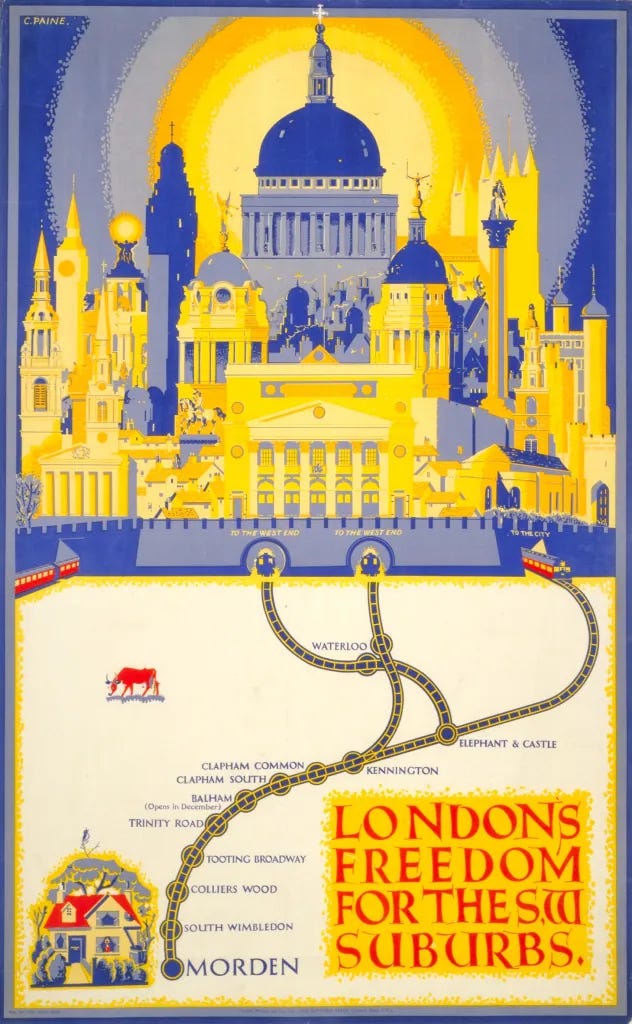
Christian Wolmar, the author of Subterranean Railway, will be giving a new talk at PRA in Crystal Palace on Monday, September 14, telling the heroic tale of how the Northern line reached Morden via the world’s longest tunnel.
The event is at the Phoenix Community Centre, 66 Westow Street, SE19, next to Sainsbury’s in Crystal Palace Triangle. All welcome, non-members fee £2, including refreshments.
Doors open at 2pm
.
Liberation Line was one of the best W. W 2 books I have read and equal first among my favourite of yours, The Great Railway Revolution.